© 2025 Geni Kapo • All Rights Reserved • Designed by Gurgenius Kapoor

Top
Back
Line 1
Ideation Sketching and Exploration

K9 Assist

Hind Leg Wheelchair for Dogs


K9Assist is a custom-designed mobility aid developed to support dogs with hind limb paralysis, inspired by my own dog Milo’s recovery after a spinal stroke. Existing solutions were often unavailable, poorly fitted, or unsuitable for larger breeds—making recovery difficult for both pets and caregivers. As an industrial designer, I set out to create a functional, adaptable, and humane solution. Starting with hands-on prototyping and real-world testing, the design evolved into a lightweight, adjustable wheelchair featuring cushioned supports, dual harness retention, angled wheels for stability, and a grab rail for assisted mobility. Final refinements were done in CAD, resulting in a sleek, ergonomic, and breed-flexible product that promotes natural movement, aids muscle recovery, and restores dignity to paraplegic dogs. K9Assist reflects a user-centric approach grounded in empathy, functionality, and form, tailored for dogs of varying sizes and mobility needs.

Year

2022
Industry

MedTech

Contribution

Concept Development
Industrial Design
Mechanical Design
Mockup POC

Team

Gurgenius / ID-Mech

image 19

More Than a Pet — A Loyal Companion, A Lifelong Friend

Let’s talk about man’s best friend — The dog. For thousands of years, dogs have shared a deep bond with humans, offering loyalty, companionship, and societal support. They reduce stress, ease loneliness, and play a key role in a child’s emotional development. Dogs aren’t just pets — they become family.

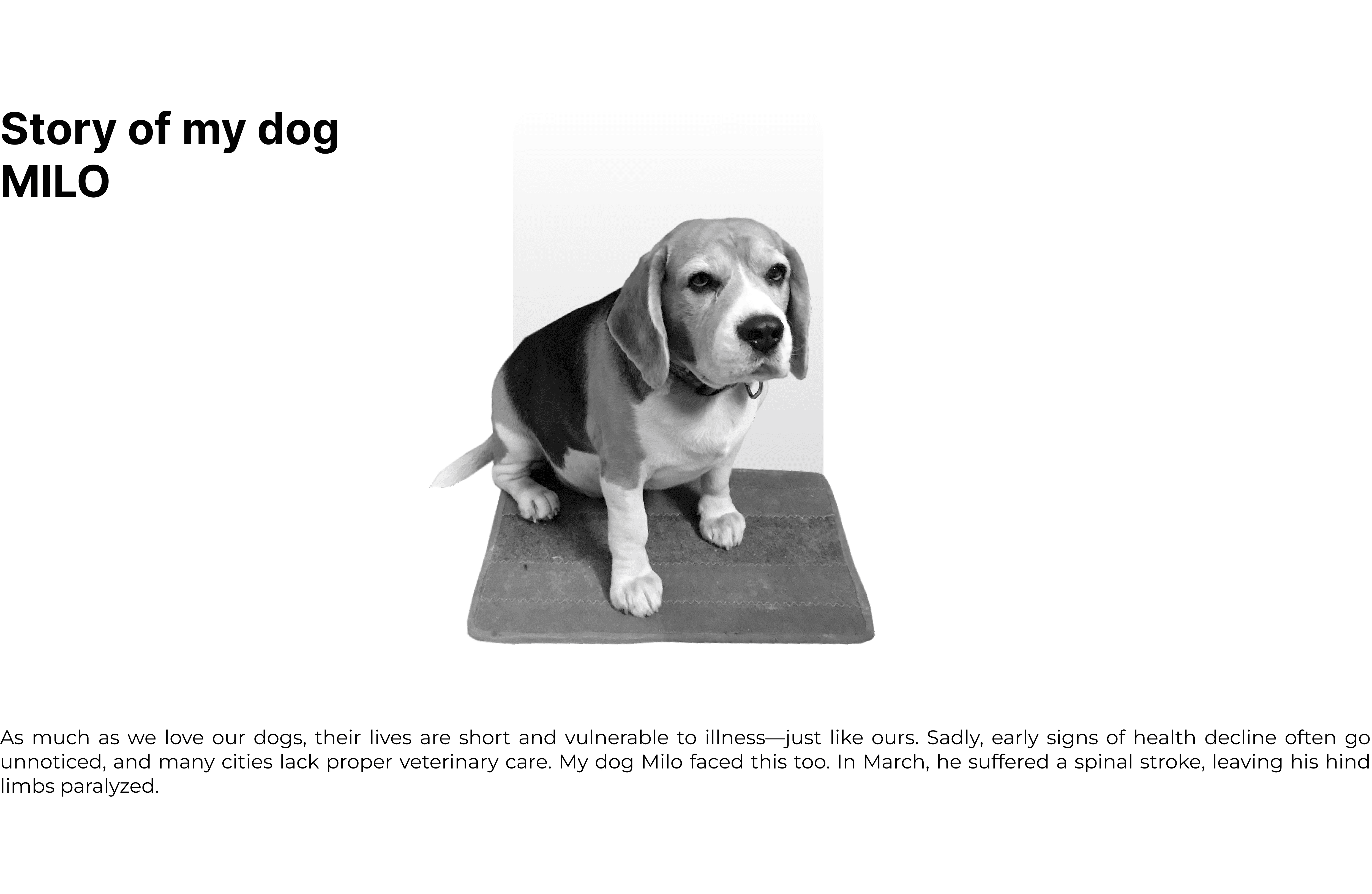
The Story of my Dog MILO

As much as we love our dogs, their lives are short and vulnerable to illness—just like ours. Sadly, early signs of health decline often go unnoticed, and many cities lack proper veterinary care. My dog Milo faced this too. In March, he suffered a spinal stroke, leaving his hind limbs paralyzed.

image 21

Symptoms (Sudden Onset)

Depending on the severity of FCE, dogs may experience one or more of the above symptoms suddenly. My dog experienced all three. His life came to a standstill—he couldn’t walk, relieve himself, or even remain upright on all four legs.

4-07 1

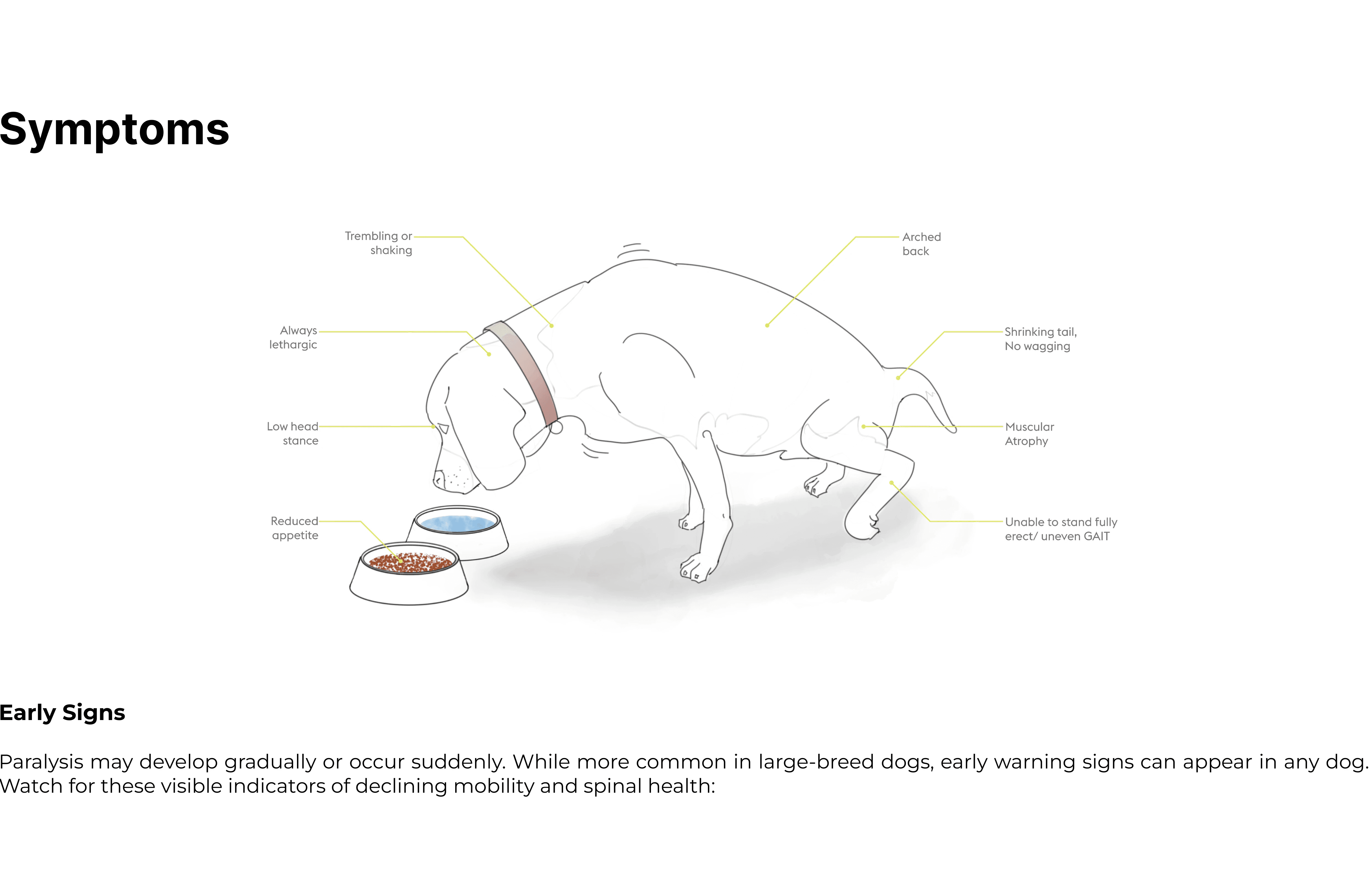
Symptoms (Early Signs)

Paralysis may develop gradually or occur suddenly. While more common in large-breed dogs, early warning signs can appear in any dog. Watch for these visible indicators of declining mobility and spinal health:

3-06 1
image 23

My Take

Create a support frame—like a baby walker which can help dogs relearn standing and walking, regain their leg strength one small step at a time.

Dr. Ravinder Singh

Occupation: Veterinarian Surgeon
Experience: + 20 Years
About: Encounters close to 50 paralysis cases in a week and also performed surgery on my dog.

“Dogs with spinal paralysis can regain motor and sensory function significantly through daily physical therapy, massages to boost blood flow, and strict adherence to prescriptions !”

image 22
Vector 30Vector 32Vector 31Vector 33
Vector 29

Recovery

Recovery from paralysis in dogs is possible with therapies like acupressure, hydrotherapy, and laser treatment, but progress is slow and uncertain. Without intervention, their lifespan can significantly decrease. Caring for a paralyzed dog is physically, emotionally, and financially demanding, and not all pet owners have the resources or time to commit.

5-09 1

Temporary Fix

During the nationwide COVID-19 lock down, vet hospitals and support services were completely shut. I had to quickly create a temporary solution to aid Milo’s recovery, as early physical therapy is crucial for nerve regeneration. It also allowed him to relieve himself outdoors with dignity.

6-10 1

About this condition

Fibrocartilaginous Embolism (FCE) — Canine Spinal Stroke. FCE is a condition where a piece of fibrous cartilage (soft, gel-like material) blocks blood flow to the spinal cord, causing a “stroke.” This can lead to sudden paralysis in one or more limbs. The exact cause remains unknown. Watch the GIF above to understand it better.

spinal-stroke-illustration_1 1

What I came up with

A harness in form of two connected rings made out of Garden Pipe, foam tube, nylon rope and strap. It was effective in training my dog to stand and sit. Also dogs are able to defecate with this thing on.

7-11-11 1
Vector 34

Temporary Solution (worth it?)

This temporary solution helped my dog stand, walk, and regain some mobility. But the physical strain—especially on the lower back—made it clear this wasn’t a sustainable long-term fix. We needed a more ergonomic solution that reduced our effort while giving the dog more freedom.

8-12 1
milo-13 1

Anthropometric considerations for Frame Design

10-14 110-14 2

Initial Concept

A basic frame shape with two different types of fitting styles.

Group 305

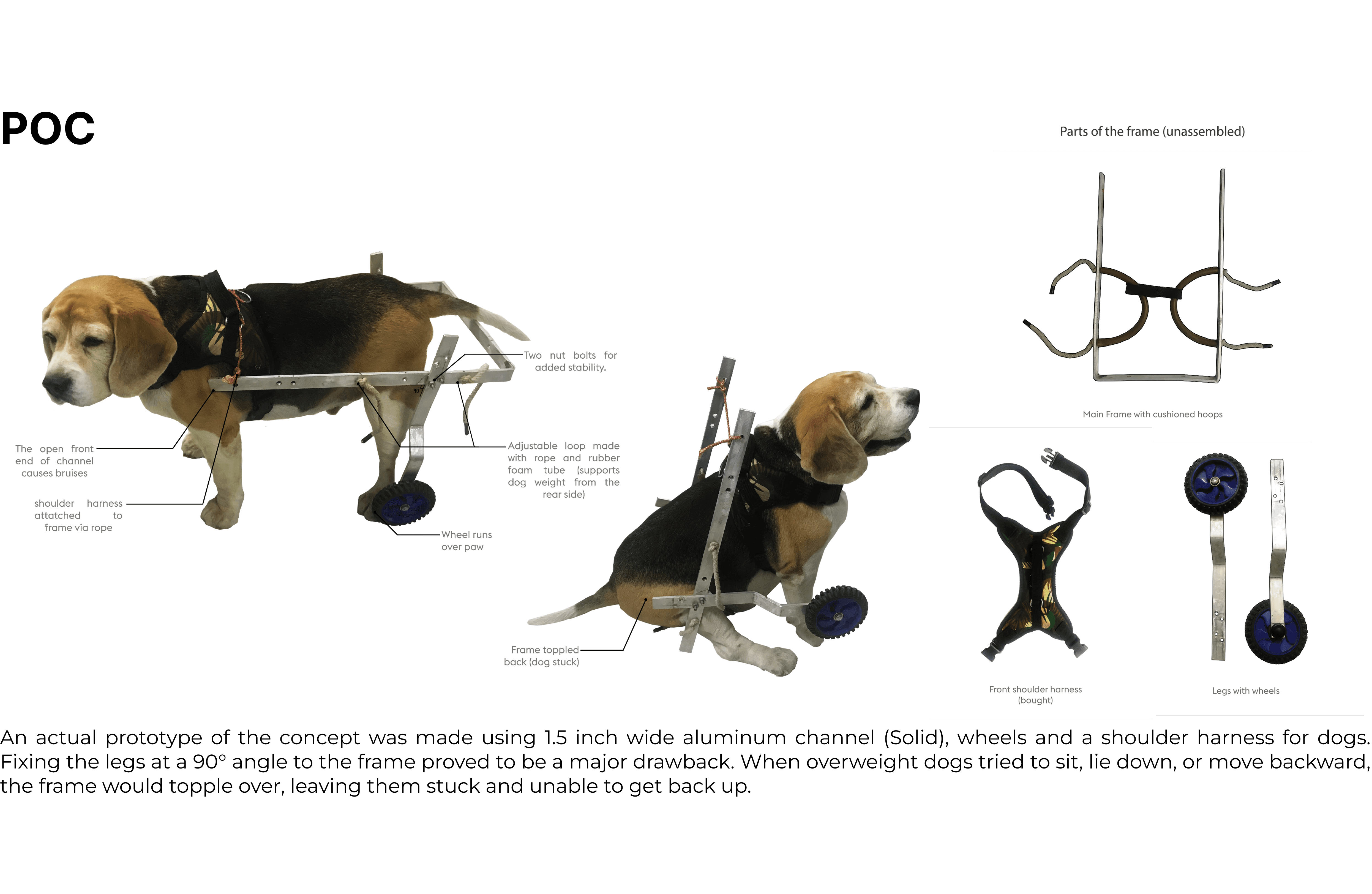
POC 1.0

An actual prototype of the concept was made using 1.5 inch wide aluminum channel (Solid), wheels and a shoulder harness for dogs. Fixing the legs at a 90° angle to the frame proved to be a major drawback. When overweight dogs tried to sit, lie down, or move backward, the frame would topple over, leaving them stuck and unable to get back up.

11-15 111-15 2
Slight adjustment
12-16 112-16 2

POC Testing

The concept frame worked effectively during testing, giving the dog full freedom to move and explore. It significantly aided recovery by reactivating walking muscles. With the basic form validated, it was time to move into the Ideation stage.

13-17 1
15@1.25x 1
Moodboard Inspiration
Ideation Sketching
Renders
16-23 117-24 1
milo-25 1

Finished Design

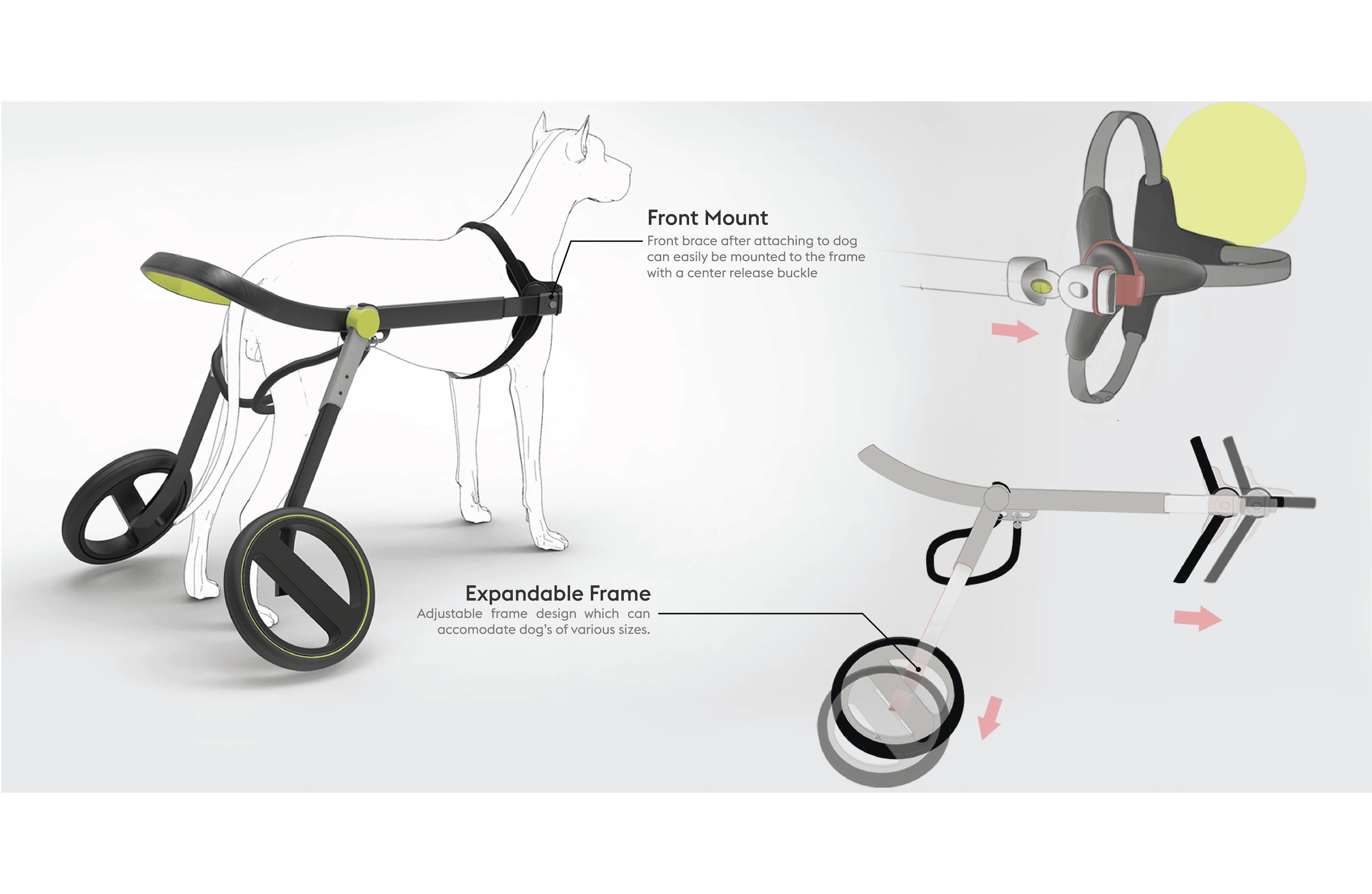
After rounds of ideation, a refined and minimal design was achieved. New features were added to ensure a better fit and adaptability for dogs of various sizes. Beyond functionality, the final product also offers a premium finish.

milo-22 1
milo-21 1

Steps to secure the Rear-Leg Lifting Harness

7-11 1
7-11 1
Polygon 2
Group 340
14-18 1
linkefd 1behance-logo-png-transparent 1
Innovator, Gurgenius Kapoor